🌌 Cosmic Drive: The Andrew Elsan Chronicles Episode 10 – Awakening Complete Volume I Finale When the universe becomes a machine, one soul becomes a rebellion. 🪐 Weekly Release · Friday | 10 April 2026 Volume I: The Awakening — Final Episode Every journey begins with listening. Every rebellion begins with a choice. And every awakening… demands action. 🌠 Episode 10 – Awakening Complete The universe held its breath. Across the vast lattice of the Cosmic Drive Grid , lines of control pulsed brighter than ever before. The Continuum Order had fully mobilized. Sentinels aligned in perfect symmetry, waiting to enforce the First Rule. No planet may choose its own path. Andrew Elsan stood at the heart of the resonance field, surrounded by the soft glow of awakened Cores. His hands trembled—not with fear, but with certainty. The choice had already been made. “This is the point of no return,” Nyx Calder said quietly, watching the Grid tighten. “If you do this, there’s no undoing it.” Aera Val...

World Braille Day
Promoting Inclusion, Accessibility, and the Right to Read
Introduction
World Braille Day is observed every year on 4th January to raise awareness about the importance of Braille as a vital means of communication for persons who are blind or visually impaired. The day emphasizes accessibility, inclusion, and equal opportunity, reaffirming that access to information is a fundamental human right.
World Braille Day is officially recognized by the United Nations as part of its commitment to inclusive development and human dignity.
Why 4th January Is Significant
The date marks the birth anniversary of Louis Braille, who lost his eyesight at a young age and later developed the Braille writing system. His innovation transformed the lives of millions by enabling independent reading, writing, and learning.
What Is Braille?
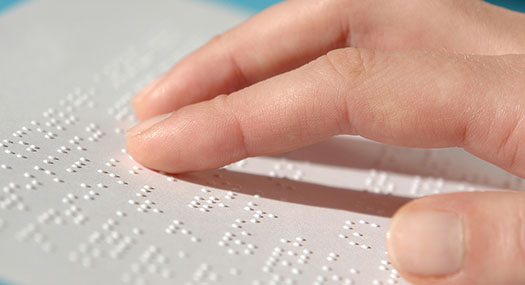
Braille is a tactile writing system that uses patterns of raised dots to represent letters, numbers, and symbols. It allows people with visual impairments to:
Read and write independently
Access education and information
Participate fully in social and professional life
Braille is not a language; it is a system of reading and writing adaptable to many languages.
Importance of Braille in Society
Braille plays a critical role in:
Education and literacy
Employment and skill development
Personal independence
Social inclusion and dignity
Without accessible formats like Braille, many individuals face barriers to learning and participation.
Braille in the Modern Digital Age
Despite advancements in audio technology, Braille remains essential because:
It supports true literacy, including spelling and grammar
It improves comprehension and cognitive development
It enables privacy and accuracy in reading
Digital Braille displays and assistive technologies have further expanded access in education and workplaces.
Global Relevance of World Braille Day
World Braille Day reminds governments, institutions, and communities to:
Promote inclusive education
Ensure accessible public information
Support assistive technologies
Respect the rights of persons with disabilities
Inclusion strengthens societies as a whole.
How World Braille Day Can Be Observed
Raise awareness about accessibility needs
Support inclusive education initiatives
Learn basic Braille alphabets
Encourage the use of accessible formats in schools and offices
Advocate for equal access to information
Small steps contribute to a more inclusive world.
Conclusion
World Braille Day is more than a commemoration—it is a call to action. It reminds us that true progress is measured by how inclusive our societies are. By promoting Braille literacy and accessibility, we affirm the dignity, independence, and rights of persons with visual impairments.
Accessibility is not charity.
It is justice.
Support This Work
This blog is created to share free, educational, and awareness-based content that promotes inclusion, learning, and human dignity.
If you found this article helpful and wish to support the continuation of this service, you may contribute a small voluntary amount using the link below.
👉 Support via PayPal:
https://www.paypal.com/ncp/payment/G5LPGXG437DUL
Your support helps sustain research, writing, and content hosting.
Explore More
🔗 Read more articles on global observances and awareness:
👉 https://craarts.blogspot.com
🎨 Explore inclusive and educational visuals:
👉 https://www.shutterstock.com/g/craarts
Comments
Post a Comment